Product
 Brand
Brand Articles
 Tools
Tools
Emerging Storage Technologies: MRAM, RRAM, and PCRAM
Basics of Nonvolatile Memories: MRAM, RRAM, and PRAM
2026 Executive Summary
As of January 2026, the semiconductor landscape is shifting from traditional DRAM and NAND toward emerging non-volatile memories to support Generative AI, Edge Computing, and 6G. MRAM has become the standard for replacing embedded Flash in automotive microcontrollers. RRAM is dominating AI inference at the edge due to its neuromorphic capabilities. PCRAM, despite the sunset of Intel Optane, remains vital for CXL-based memory expansion. This guide analyzes these technologies based on speed, endurance, and current 2026 market adoption.
2026 Guide to Emerging Memory |
Why are new storage technologies needed in 2026?
New storage technologies are essential in 2026 because traditional memory architectures cannot keep pace with the latency and power requirements of Generative AI, 6G networks, and autonomous edge devices. Applications such as the Internet of Things (IoT), Artificial Intelligence (AI), and Industry 5.0 are driving explosive growth in data volume. All information must be collected at the edge and processed, transmitted, and analyzed at multiple layers from the edge to the cloud in real-time.
With the huge demand for high-bandwidth data transmission, traditional memories such as DRAM, SRAM, and NAND Flash are hitting physical scaling walls. The "Memory Wall"—the bottleneck where processor speed outpaces memory speed—has become critical. This is driving the semiconductor industry to deploy "Persistent Memory" solutions that combine the speed of RAM with the non-volatility of Flash. Three types of memory lead this charge in 2026: MRAM (Magnetic RAM), RRAM (Resistive RAM), and PCRAM (Phase Change RAM).
Memory accounts for nearly 30% of the semiconductor market today. The industry is currently solving the "Von Neumann Bottleneck" by moving computation closer to memory (Compute-in-Memory). This strategic shift underpins the next generation of high-capacity memory manufacturing systems for AI training clusters and low-power edge inference.
What is MRAM and how does it work?
MRAM (Magnetic Random Access Memory) is a non-volatile memory that stores data using magnetic field polarization rather than electric charge, offering virtually infinite endurance. The memory cell consists of a magnetic tunnel junction (MTJ) with a free magnetic layer, a tunnel barrier, and a fixed magnetic layer. When the magnetic orientation of the free layer is parallel to the fixed layer, resistance is low (representing "0"); when anti-parallel, resistance is high (representing "1").
In 2026, the dominant form is STT-MRAM (Spin-Transfer Torque), which uses a spin-polarized current to switch the magnetic state. This method has largely replaced older magnetic field-driven techniques, allowing for high-density integration in nodes as small as 12nm.

Structure of STT-MRAM Cell
Key Characteristics of MRAM in 2026
Non-volatile: Data is retained without power, making it ideal for automotive "instant-on" systems.
High Endurance: Unlike Flash, MRAM can withstand nearly infinite read/write cycles (up to 10^14 cycles), effectively matching DRAM.
Speed & Efficiency: Write times are in the nanosecond range (comparable to SRAM) with extremely low leakage current.
Embedded Utility: As of 2026, MRAM is the primary replacement for embedded Flash (eFlash) in microcontrollers (MCUs) because eFlash cannot scale easily below 28nm.
Challenges: The primary manufacturing challenge remains the complexity of the magnetic materials and sensitivity to external magnetic fields, though modern packaging shielding has largely mitigated this in industrial applications.
Is PCRAM still relevant in 2026?
PCRAM (Phase Change Random Access Memory) remains a critical technology for Storage Class Memory (SCM), bridging the gap between fast DRAM and slow SSDs. It utilizes a chalcogenide glass material (typically GST - Germanium-Antimony-Tellurium) that switches between a crystalline state (low resistance, "1") and an amorphous state (high resistance, "0") when heated.

Internal structure of Phase Change Memory (PCRAM)
The switching process involves two distinct thermal operations:
SET (Crystallization): Heating the material above the crystallization point but below the melting point to create a low-resistance state.
RESET (Amorphization): Rapidly heating above the melting point and quenching to freeze the atoms in a disordered, high-resistance state.
Evolution: From 3D XPoint to CXL
Historically, Intel and Micron commercialized PCRAM via 3D XPoint technology (Intel Optane). While the Optane brand was discontinued in 2022, the underlying PCRAM technology has evolved. In 2026, PCRAM is finding new life in CXL (Compute Express Link) memory expanders, allowing data centers to pool vast amounts of non-volatile memory that approaches DRAM speeds at a lower cost per bit.
2026 Advantages:
Density: 3D stacking capability allows for high-density storage suitable for AI model weights.
Radiation Hardness: Excellent for aerospace and military applications as it is immune to magnetic interference.
Current Challenges: Thermal management remains critical, as the heat required for phase change can affect adjacent cells (thermal cross-talk), requiring advanced selector diodes to mitigate errors.
How does RRAM drive AI and Edge Computing?
RRAM (Resistive Random Access Memory), often styled as ReRAM, functions by creating and breaking conductive filaments (oxygen vacancies) within a solid dielectric electrolyte sandwiched between two electrodes. By 2026, RRAM has emerged as the leading candidate for Neuromorphic Computing and AI-at-the-edge applications.

Crossbar Array Architecture of RRAM
RRAM's simple metal-insulator-metal structure makes it highly compatible with standard CMOS processes. Its ability to exist in multiple resistance states (not just 0 and 1) allows it to function like a biological synapse, enabling "analog" computing inside the memory array itself—perfect for efficient AI neural network processing.
Why RRAM is winning in 2026
Low Power: It operates at lower voltages than MRAM and PCRAM, ideal for battery-powered IoT nodes.
High Speed: Switching times are often below 100ns.
Scalability: RRAM scales effectively below 10nm, surpassing the physical limits of current Flash technology.
Current RRAM architectures utilize "Active Matrix" designs where transistors control the cells to prevent sneak-path currents, ensuring high data reliability for industrial microcontrollers produced by major foundries like TSMC and GlobalFoundries.
Future Outlook: The Memory Landscape 2026-2030
Emerging memory technologies have transitioned from R&D labs to commercial reality. By 2030, the combined market for MRAM, PCRAM, and RRAM is projected to exceed $36 billion. Economies of scale are rapidly driving down costs, making these technologies competitive not just in performance, but in price-per-bit for specific use cases.
The 2026 roadmap is clear:
Embedded: MRAM and RRAM will completely displace embedded Flash in 22nm and smaller process nodes for MCUs and SoCs.
Data Center: CXL-based PCRAM and high-density MRAM will serve as the "Far Memory" tier, reducing the reliance on expensive high-bandwidth DRAM.
AI: RRAM will become the standard for in-memory computing chips, drastically reducing the energy cost of AI inference.
While DRAM and NAND Flash will remain dominant for bulk storage due to their entrenched cost advantages, the emerging memory trinity—MRAM, PCRAM, and RRAM—has secured its place as the enabler of the AI and IoT revolution.
 UTMEL
UTMEL
We are the professional distributor of electronic components, providing a large variety of products to save you a lot of time, effort, and cost with our efficient self-customized service. careful order preparation fast delivery service
1.Is DRAM faster than MRAM?
Following points mention comparison between MRAM and DRAM: MRAM performs faster read/write compare to DRAM which requires capacitor charge/discharge. Both MRAM and DRAM feature similar densities. MRAM is non-volatile unlike DRAM.
2.What is ReRAM used for?
Resistive Random-Access-Memory, or ReRAM, is a memory technology that uses electrical resistance to store information. However, the resistive memory used can change its resistance depending on how much current has flowed through it, and thus this allows the memory to be reprogrammable.
3.How phase change memory works?
The P-RAM uses the fact that the chalcogenide glass changes between two states, polycrystalline and amorphous by the passage of current which produces heat as it passes through a cell. This gives rise to the name phase change, as the substance changes between the two states or phases.
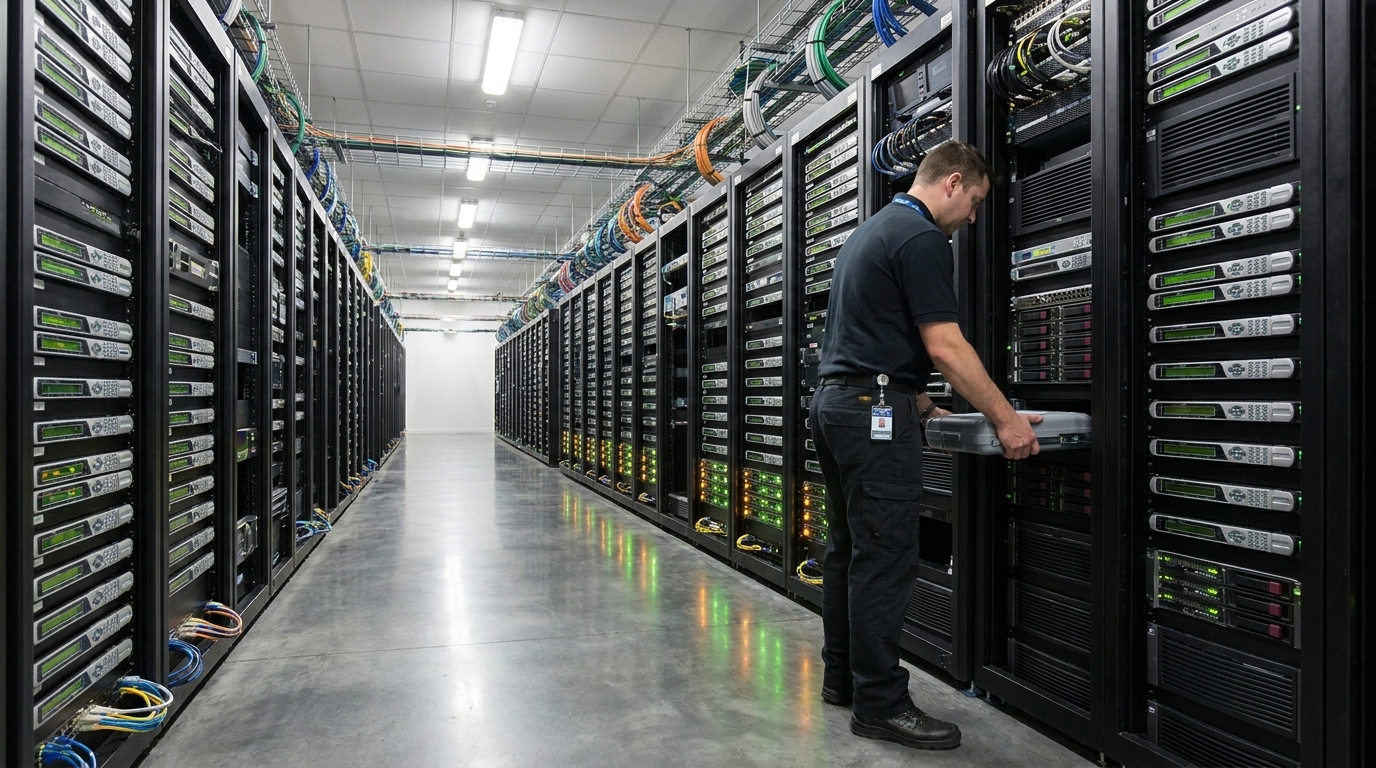 High-Capacity HDDs in the AI Era: Sourcing Massive Storage for Cold DataUTMEL04 July 2026579
As generative AI and LLMs drive an explosion of unstructured data, high-capacity enterprise HDDs remain the most cost-effective solution for cold storage. Despite rising prices and supply chain bottlenecks, mechanical drives offer a massive cost-per-gigabyte advantage over SSDs. Technologies like HAMR and SMR enable capacities beyond 24TB, though deploying these drives requires robust RAID 6 strategies and secured IC supply chains to mitigate rebuilding and procurement risks.
Read More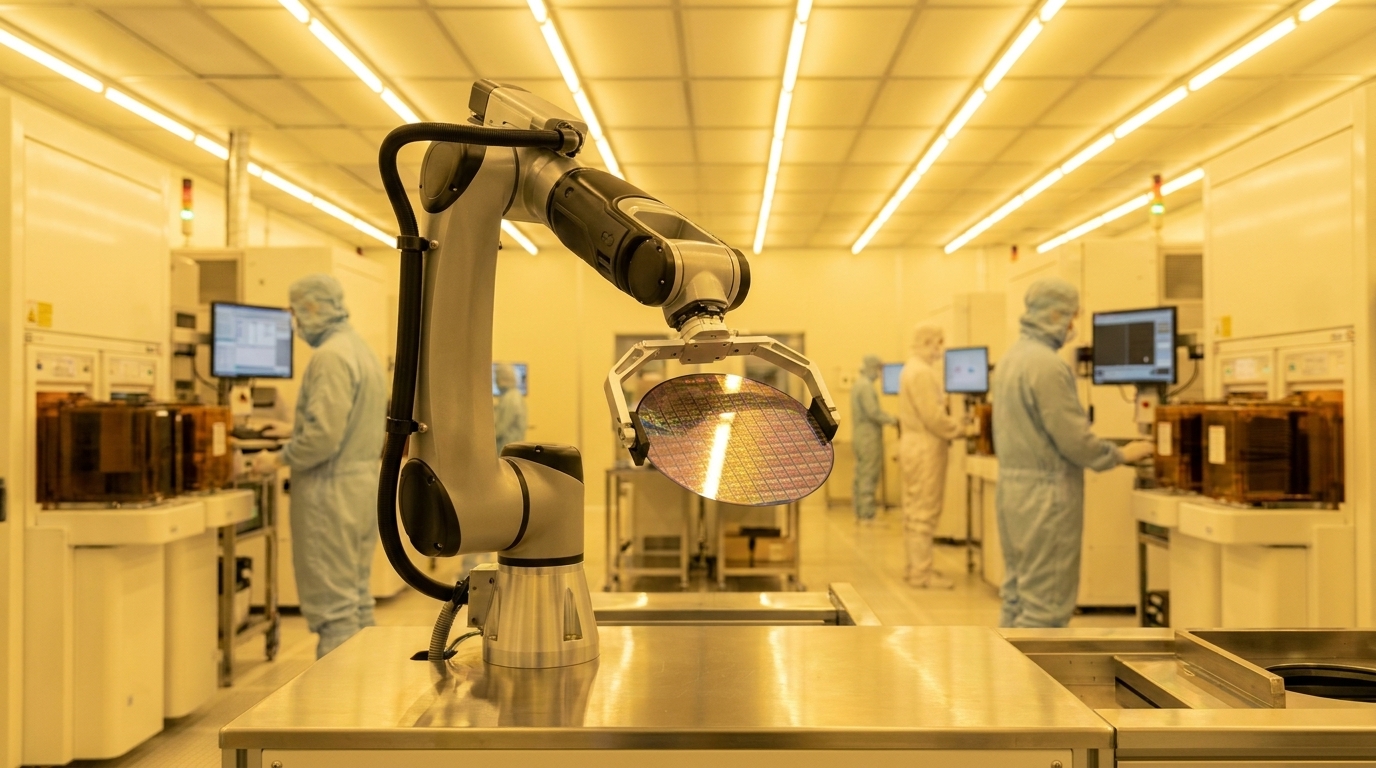 LPDDR5 Memory 2026: Lead Times, HBM Impact, and Procurement StrategiesUTMEL17 July 20263577
Global semiconductor fabrication facility managing advanced memory production. In Q2 2026, contract prices for 12GB LPDDR5X modules surged 89% quarter-over-quarter, jumping from $77.10 to $145.90, while lead times for advanced memory components stretched to 40–58 weeks. A vehicle platform designed in 2023 with specific memory requirements must ship in 2026, regardless of spot market conditions.
Read More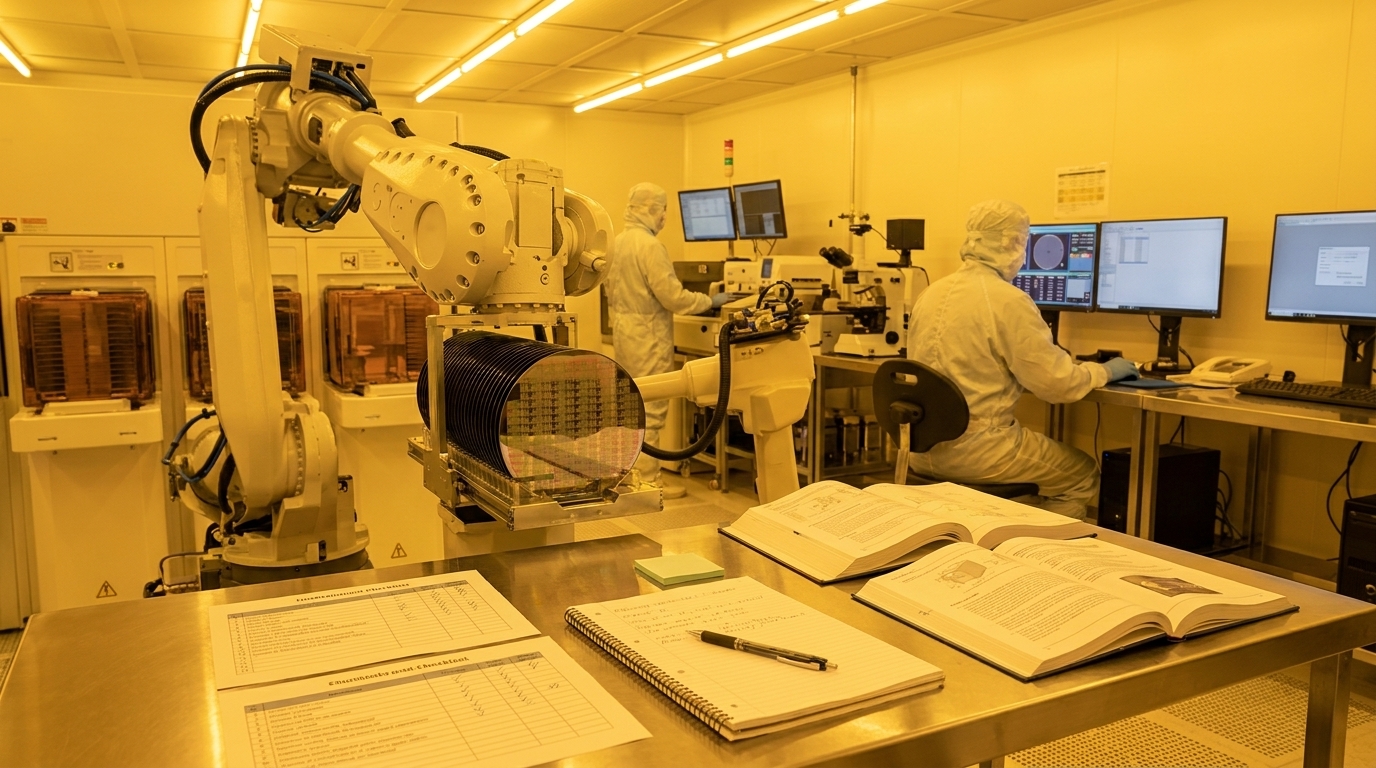 2026 DRAM and the 3-to-1 HBM Rule: Market Supply Analysis and B2B Procurement GuideUTMEL23 July 20264320
This technical report explains how the physical "3-to-1 wafer penalty" of High Bandwidth Memory (HBM) production has cannibalized standard DRAM capacity, causing severe shortages of DDR4 and DDR5 in 2026. As major hardware OEMs pass these soaring component costs directly to enterprise buyers, procurement teams must abandon Just-in-Time models in favor of rolling safety stocks and strategic long-term distributor agreements to protect budgets.
Read More Automotive vs. Industrial Memory: How to Verify Grade Codes Before Sourcing In this guideUTMEL06 August 2026349
Memory ordering codes can look almost identical while representing different temperature limits, packages, revisions, qualification evidence, or lifecycle commitments. For automotive and long-life industrial designs, the safe purchasing unit is the complete manufacturer ordering code, not a base part number plus a familiar-looking suffix.
Read More How to Use an External Hard Drive?UTMEL24 June 20219377
The external hard drive is a compact and portable hard drive storage which can be plugged in or unplugged at any time. It mainly uses USB or IEEE1394 interfaces. It can transmit data with the system at a higher speed. The IEEE 1394 interface transfer rate is 50-100 MB/s.
Read More
Subscribe to Utmel !
![22H240P.25]() 22H240P.25
22H240P.25Remington Industries
![34HNS2.5]() 34HNS2.5
34HNS2.5Remington Industries
![35HNSP.125]() 35HNSP.125
35HNSP.125Remington Industries
![40HNSP.5]() 40HNSP.5
40HNSP.5Remington Industries
![15HNSP.125]() 15HNSP.125
15HNSP.125Remington Industries
![21HNSP]() 21HNSP
21HNSPRemington Industries
![34HNS]() 34HNS
34HNSRemington Industries
![25HNSP.25]() 25HNSP.25
25HNSP.25Remington Industries
![23HNSP]() 23HNSP
23HNSPRemington Industries
![28H240P.25]() 28H240P.25
28H240P.25Remington Industries